
Pool Finishes Explained: How to Choose the Surface That’s Right for Your San Diego Pool
The finish inside your pool affects how it looks, how it feels under your feet, how easy it is to maintain — and how long it lasts. Here’s everything you need to know to make the right choice.
Why Pool Finish Matters More Than Most People Realize
When most homeowners think about their pool, they think about the shape, the water features, the deck. The finish — the surface that lines the interior of the shell — often feels like a last-minute decision. It shouldn’t be.
Your pool finish is what you see every time you look at the water. It’s what you feel every time you step in. It determines the color and clarity of the water, how smooth or textured the surface is, how resistant it is to algae and staining, and how often it will need to be refinished. In short, it’s one of the most important design and practical decisions in the entire project.
Here’s a clear breakdown of the main finishes we work with at Everlasting, and what makes each one the right choice for different projects and preferences.
Plaster — The Classic
Standard white plaster is where pool finishing started. It’s a mixture of white cement and marble dust, and it gives pools that clean, classic blue look that defined backyards for decades.
Plaster is still widely used because it’s affordable, applies quickly, and achieves a smooth surface that’s easy on feet. It also responds well to tinting, so you can achieve soft blue, grey, or warm white tones.
The tradeoff is durability. Standard plaster typically lasts 7–12 years before it begins to etch, stain, or become rough. It’s more porous than newer finishes, which means it’s more susceptible to algae and mineral staining — especially in San Diego’s hard water conditions.
For many homeowners, plaster is a good starting point. But if you’re building a new pool and investing in quality, there are longer-lasting options worth considering.
Pebble and Aggregate Finishes — Texture, Depth, and Durability
Pebble finishes are among the most popular choices for luxury pools today, and for good reason. They blend plaster with small stones or quartz crystals to create a surface that’s both beautiful and extremely durable.
The visual effect is stunning. The aggregate catches and reflects light in a way that flat plaster can’t, giving the water a layered, jewel-like quality. Colors range from pale ivory and warm sand to deep slate and charcoal — and the combination of aggregate color and pool depth creates a look that changes throughout the day.
Pebble and quartz finishes typically last 15–20+ years. They’re denser and more resistant to chemicals, staining, and algae than standard plaster. The texture is slightly rough underfoot, which some clients love and others prefer to soften with a smoother option.
Marble and Glass Bead Finishes — Luminosity and Refinement
For clients who want the water to feel alive — almost glowing — marble dust and glass bead finishes are the answer. These are premium surfaces that catch light differently than any other material and create a sense of depth and movement even in still water.
Marble finishes use white marble aggregate instead of standard quartz. The result is a softer, more luminous surface with a gentle sheen. Colors read as cooler and more mineral in tone — beautiful for contemporary pools where the water itself is the focal point.
Glass bead finishes take that even further. Tiny glass beads refract light in all directions, making the water shimmer and pulse with color as the sun moves across it. At night, under LED lighting, the effect is extraordinary. These finishes are typically the most premium option, but clients who choose them rarely second-guess the decision.
Porcelain and Ceramic Tile — Precision and Luxury
Full tile finishes are increasingly popular for clients who want something truly distinctive. Porcelain pool tile is extremely durable, non-porous, and resistant to chemicals and UV fading. It doesn’t stain the way plaster can, and it never etches. Because it doesn’t absorb water, it actively resists algae growth.
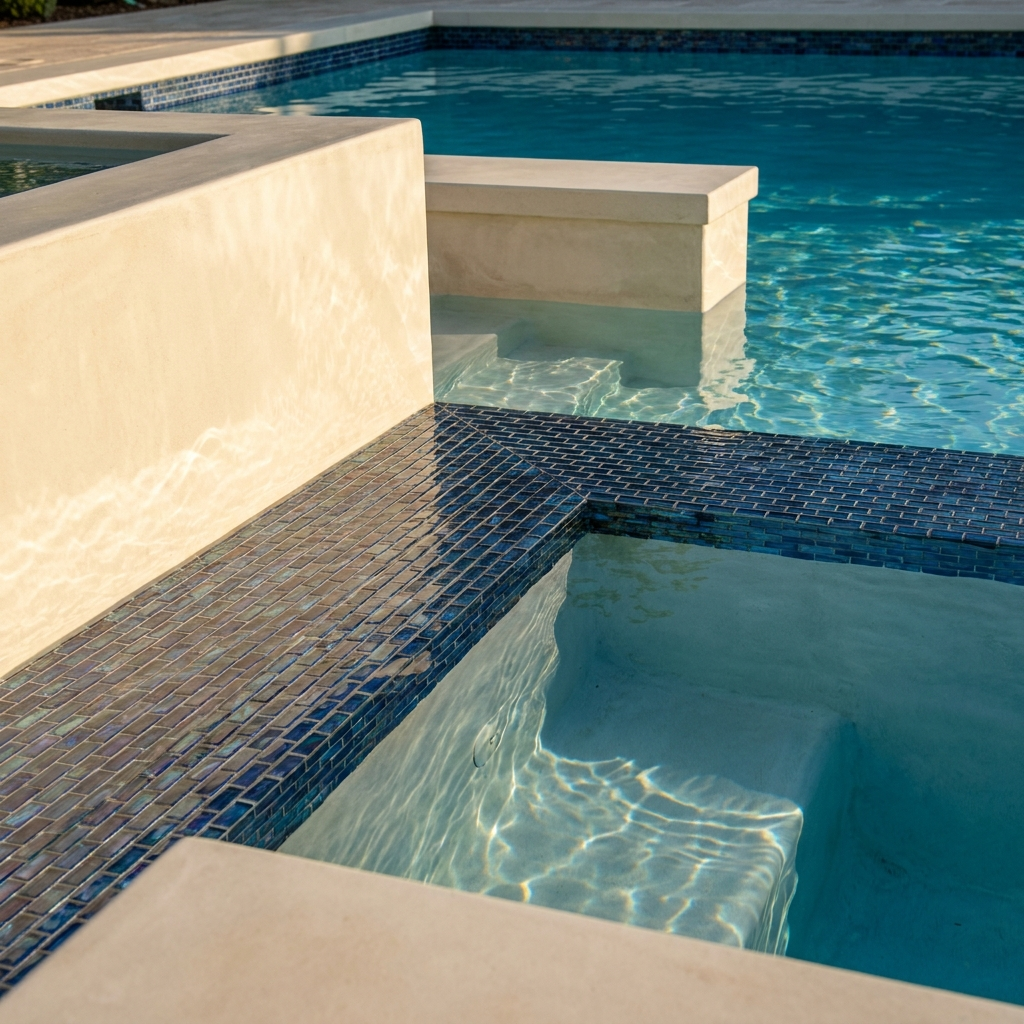
Full tile pools work beautifully in high-end residential projects, infinity pool designs, and any space where a specific color or pattern is part of the design intention. The options are vast: large-format porcelain slabs in grey or white, small handmade Mediterranean tiles, iridescent mosaic in blue or gold, or custom patterns that turn the pool floor into something closer to a work of art.
Installation is more labor-intensive than plaster or aggregate, and cost reflects that. But for the right project, tile is unmatched.
Concrete and Exposed Aggregate — The Architectural Option
Some of our most architecturally ambitious pool projects feature a polished or textured concrete finish inside the shell. This works particularly well in modern and minimalist designs where the concrete feels intentional — not like a rough construction material, but like a refined surface choice.
Exposed aggregate concrete creates a natural, earthy look with excellent grip. It’s highly durable and works beautifully in pools designed to feel organic — naturalistic shapes, boulder features, surrounding drought-tolerant planting.
Polished or sealed concrete creates a sleeker, more modern finish. Increasingly used in projects where the pool is designed to blend into a surrounding concrete patio or deck — creating visual continuity across the whole outdoor space.
How to Choose: What We Talk Through With Every Client
Every finish has a place. The right choice depends on a few key things:
- Your design aesthetic — modern and architectural, or warm and resort-style? Tile and marble suit the former. Pebble and aggregate suit the latter.
- Your maintenance expectations — plaster needs more attention over time. Tile and pebble are lower-maintenance long-term.
- How you use the pool — families with kids often prefer smoother surfaces. Lap swimmers often want something clean and minimal.
- Your water color preference — the finish color dramatically affects how the water reads. We show you samples and simulate water color in your 3D rendering.
- Budget — plaster is the most accessible starting point. Glass bead and full tile are at the luxury end. Pebble and quartz hit a strong sweet spot of quality and value.
One thing we always recommend: make this decision as part of the overall design, not at the end of it. The finish affects every other visual decision — deck color, coping material, water feature tile, lighting. It’s much easier to get a cohesive result when finish is part of the conversation from the beginning.
See the Difference in Your Own Backyard
At Everlasting Pools & Landscape, we work through finish selection with every client as part of our design process. We bring samples, walk through options, and show you how the finish will interact with the rest of your design in your 3D rendering — so you can make the decision with confidence, not guesswork.
If you’re thinking about a new pool or a refinish of an existing one, we’d love to talk. Book a complimentary design consultation at everlastingpoolsandlandscape.com.